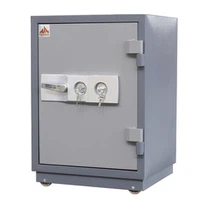
1. Filing cabinet dimensions and specifications: Designed to meet spatial requirements across various settings.
Standard filing cabinets come only in fixed sizes defined by national standards, yet office layouts, archives, server rooms, finance departments, and home studies vary significantly in their spatial requirements. Our filing cabinets offer full customization of length, width, depth, and internal configuration.
| Custom dimensions | Custom Application Case Studies |
| Width |
Narrow filing cabinets for workstations; extra-wide connected units: continuous storage cabinets spanning an entire row in the archives. |
| Depth | Standard depths:Shallow wall-mounted cabinet (for storing binders and contracts); Standard depth: Extra-deep model (for storing large drawings, surveying dossiers, and bulky tools). |
| Height | Low cabinet / mobile under-desk pedestal; Medium-height vertical filing cabinet; Standard vertical filing cabinet; |
2.Classification of Steel Plate Thickness and Structural Rigidity for Filing Cabinets
Steel plate thickness is determined based on usage frequency, the weight of stored items, security rating, and the installation environment, and is paired with various reinforcement structures.
| 0.3mm–0.5mm | Home study, lightweight household storage |
| 0.5mm-0.7mm | Storage of daily office documents for standard corporate offices |
| 0.7mm-0.9mm | High-traffic office areas, shared workstations and lockers, and school classroom lockers. |
| 0.9mm-1.2mm | Archives, finance office, server room, secure storage for classified materials, hotel linen cabinets |
| 1.2mm or more | Integrated safes for government agencies, organizations handling classified information, and the secure storage of valuable documents. |
Optional structural reinforcement available
Double-layered, thickened cabinet doors with pry-resistant edge banding
Stamped, reinforced corner brackets at all four corners of the cabinet body
Thickened shelves with load-bearing reinforcement ribs (prevents sagging under heavy files or books)
Full-width reinforcement crossbar on the back of the cabinet
Pry-resistant door gap design
Heavy-duty, integrated concrete-filled fireproof and anti-theft design
3.The color of the filing cabinet and the special-function coating applied to its surface.
Custom paintwork is the most distinctive customization option in government and enterprise procurement!
| Available types | Detailed Specifications |
| Standard stock colors | Pure white, light gray, dark gray, black, coffee brown, lake blue, and dark green (these are popular color palettes for the office). |
| Custom Spot Color | Capable of precise color matching with RAL and the full range of Pantone standards; custom color matching is also available for exclusive corporate VIP colors. |
| Paint finish texture | Gloss, smooth, orange-peel, and matte powder finishes |
| Functional coatings | Scratch- and wear-resistant coating, moisture- and rust-resistant powder coating for coastal environments, and anti-static coating. |
4.We also support custom brand logos, utilizing various techniques to create a unique brand identity.
Customizable with corporate logos, company names, serial numbers, and department identifiers; production methods can be selected to suit specific needs, budgets, and quality tiers.
| Manufacturing Process | Process Overview |
| ABS Two-Color Injection Molding | Seamless, unified look and feel |
| Plastic Electroplating with Brushed Finish | Exudes understated luxury and sophistication, perfectly aligning with the positioning of VIP and high-end lockers. |
| Self-adhesive vinyl stickers | Adhesive-backed labels for flexible replacement. |
5.Customized Locking Systems: Distinguishing Between Security Levels and Usage Scenarios
We select the lock mechanism based on document confidentiality requirements and personnel management protocols.
| Lock Type | Customized Content & Applicable Scenarios |
| Mechanical key lock | Master-keyed systems (a single key opens all office cabinets), master/sub-master key systems, and high-security lock cylinders; suitable for unified corporate maintenance and management. |
| Mechanical combination lock | Finance Office, Personal Confidential Filing Cabinet |
| Electronic combination lock | The ideal choice for storage in archives and hotel guest rooms. |
| Dual-lock combination | Dual-locking mechanism (key plus passcode); suitable for cabinets storing classified materials and important financial records. |
6.Modular customization of cabinet doors, drawers, and internal layouts.
Cabinet Door Styles
Double-hinged steel doors: Fully enclosed for secure document storage
3C glass viewing doors: Transparent/tempered glass for easy visibility of stored files
Sliding doors: Space-saving design requiring no clearance for opening
Louvered doors: Ventilated and moisture-resistant; ideal for server rooms or humid archive rooms
Customizable internal storage configuration
Fixed shelves, adjustable shelves, drawer units, combined drawer and cabinet door units, small private compartments, laptop storage area, and storage tubes for rolled drawings.
7.Fully customized outer packaging and branding
Seamless end-to-end brand experience for shipping
Customizable retail cartons: Cartons printed with the brand logo, product specifications, and lifestyle imagery
Full-container export shipping: Standard corrugated boxes featuring custom shipping marks and destination port identifiers
Internal protective packaging: Custom foam inserts and rigid cardboard corner protectors to prevent impact and crushing damage during transit
Installation instructions: Comprehensive illustrated assembly manual included
8.Complete OEM Process for Filing Cabinets: From Requirement Discussion to Shipment
Step 1: Requirement Alignment (Project Foundation)
Information to be provided by the client: Reference images, hand-drawn sketches, CAD dimension drawings
Technical specifications: Dimensions (L/W/H), steel sheet thickness, lock style, paint finish/color/texture
Branding requirements: Logo application method, placement, and text content
Order volume: Initial order quantity + estimated reorder volume; target unit price range
Delivery timeline and special requirements: Moisture/static protection, certifications (CE, ISO, etc.)
Factory deliverables
Feasibility assessment, preliminary quotation, estimated production lead time, and item-by-item clarification of vague requirements
Tip: The more detailed the information, the fewer revisions required later; sending a benchmark sample allows the factory to replicate or adjust the design accurately.
Step 2: Sample Production
Initiate physical sample production once requirements are finalized.
| Stage | Duration | Work Content |
| Production of engineering drawings | 3–7 days | Drafting dimensional/structural drawings and sheet metal component |
| Finalization and approval of drawings | 3–7 days | The customer verifies the parameters and signs to confirm. |
| New mold development | 5–20 days | Custom tooling or molds are required for unconventional shapes and special drawer structures. |
| Raw material procurement and stocking | 3–15 days | Steel plates, locks, hardware, and coating raw materials undergo quality inspection upon warehousing. |
| Production of physical samples | 12–28 days | Produce 1–3 samples. |
Deliverables: Engineering drawings and physical samples.
It is recommended to retain two samples: one for field testing and one to be sealed and kept as the standard reference for ensuring consistent quality in mass production.
Step 3: Shipping samples via international courier
Courier services: DHL, FedEx, UPS; delivery time: 3–15 days
Shipping costs: Typically borne by the buyer
Documents: Commercial invoice, packing list, customs clearance documentation
Inspect for shipping damage immediately upon receipt, then verify overall quality.
Step 4: Sample Verification Feedback (Returned for revision if non-compliant)
Verification Checklist
Dimensions (length, width, depth); caliper measurements of steel plate thickness; paint color uniformity; weld seam smoothness; cabinet door alignment; quietness of sliding rails; smoothness of lock operation; stability and load-bearing capacity of shelves; logo print quality; ease of assembly.
Step 5: Formally Sign the Cooperation Contract
Verify documents: Purchase Order (PO), production contract, mold ownership agreement (for products requiring mold creation), payment terms, delivery schedule, and warranty period.
Payment method: To be mutually agreed upon by the buyer and the seller.
The minimum order quantity (MOQ) for custom orders is generally over 500 units; please contact us for more information.
The Bottom Line
In a growing market, customization is an important competitive edge. With OEM parcel drop boxes, you give your clients products that fit their exact needs, reflect their brand, and aren't available elsewhere. You build long-term relationships that competitors cannot easily disrupt.
Contact us today to discuss your OEM parcel drop box project. From custom colors and branding to unique dimensions and smart lock integration, we bring your vision to life. Share your specifications, and we will provide engineering drawings, samples, and volume pricing.