


Struggling to get it right? You are not alone; successful bulk procurement requires balancing your own profit margins with end-customer satisfaction.
If you are currently negotiating a large-volume order and are concerned about various hidden costs,
this comprehensive procurement guide is designed specifically for B2B professionals. Through a practical checklist, we help you maximize the value of your vertical card file cabinet purchases-moving beyond a simple focus on the lowest unit price to achieve an optimal overall solution that balances cost, quality, and reliability.This comprehensive purchasing guide is tailored for B2B procurement professionals. Through a set of practical checklists, we help you maximize the value of your vertical card file cabinet purchase-moving beyond a simple focus on the lowest unit price to balance cost, quality, and reliability, ultimately securing the best overall solution.
Why is a strategic approach essential for bulk purchasing?
Before diving into practical techniques, it is important to understand that bulk purchasing involves far more than simply placing an order. A well-developed procurement strategy delivers the following benefits:
- Protects profit margins by avoiding hidden costs associated with poor packaging or transit damage
- Ensures consistent product quality across thousands of units
- Establishes a stable supply chain to guarantee on-time delivery
- Minimizes post-sales issues such as quality complaints and warranty disputes
Let's begin with the most critical step: supplier selection.
Supplier selection is the foundation for securing high-quality orders; do you find yourself constantly offering the lowest price yet failing to generate the best long-term returns?
Finding a reliable manufacturer of vertical card cabinets is the key to securing the best partner!
How do you identify the right one? Look for a genuine manufacturing plant with its own complete production lines, rather than a mere trading intermediary.
✅ Advantages of Working Directly with the Factory
- Cost Control: Eliminate intermediary markups to secure better pricing and greater bargaining power.
- Quality Control: Conduct on-site factory inspections to verify steel thickness, welding, and powder coating processes, ensuring consistent production quality.
- Customization Capabilities: Genuine factory support for OEM & ODM services, allowing for customization of dimensions, locks, handles, and brand logo printing.
- Clear Accountability: Direct communication ensures faster response times and issue resolution should any problems arise with a full container shipment.
⚠️ Potential Drawbacks to Consider
- Pay attention to Minimum Order Quantities (MOQs): A factory's MOQ is generally higher than that of a trading company.
- Communication requirements: You need to provide clear and complete technical specifications while also navigating potential language and cultural differences.
Middlemen / Traders: A High-Risk Shortcut
Traders do not have their own manufacturing facilities; they source goods from multiple external factories.
✅ Advantages
- Wide product range: allows for consolidating various furniture items into a single shipment.
- Flexibility for small trial orders: lower Minimum Order Quantities (MOQs) are often accepted.
❌ Disadvantages
- Price markups: added costs compress your profit margins.
- Limited quality control: inspections are restricted to finished goods rather than the entire production process, meaning many defects are only discovered after shipment.
- Passing the buck: when quality issues arise, traders and factories often blame each other, making problem resolution difficult.
For the procurement of medium-to-large-scale projects, dealing directly with a reliable steel furniture factory offers greater long-term value. You are purchasing not just a product, but a controllable supply chain!
Bulk Procurement Checklist: 7 Steps to Securing a High-Quality Order
Use this checklist to organize your negotiation points and lock in favorable terms.
1. Precisely finalize all technical specifications. Before requesting a quote, confirm the following details:
- Steel thickness: e.g., 0.4mm, 0.5mm, 1.0mm, 1.2mm; thicker steel generally offers greater durability, so choose based on usage requirements.
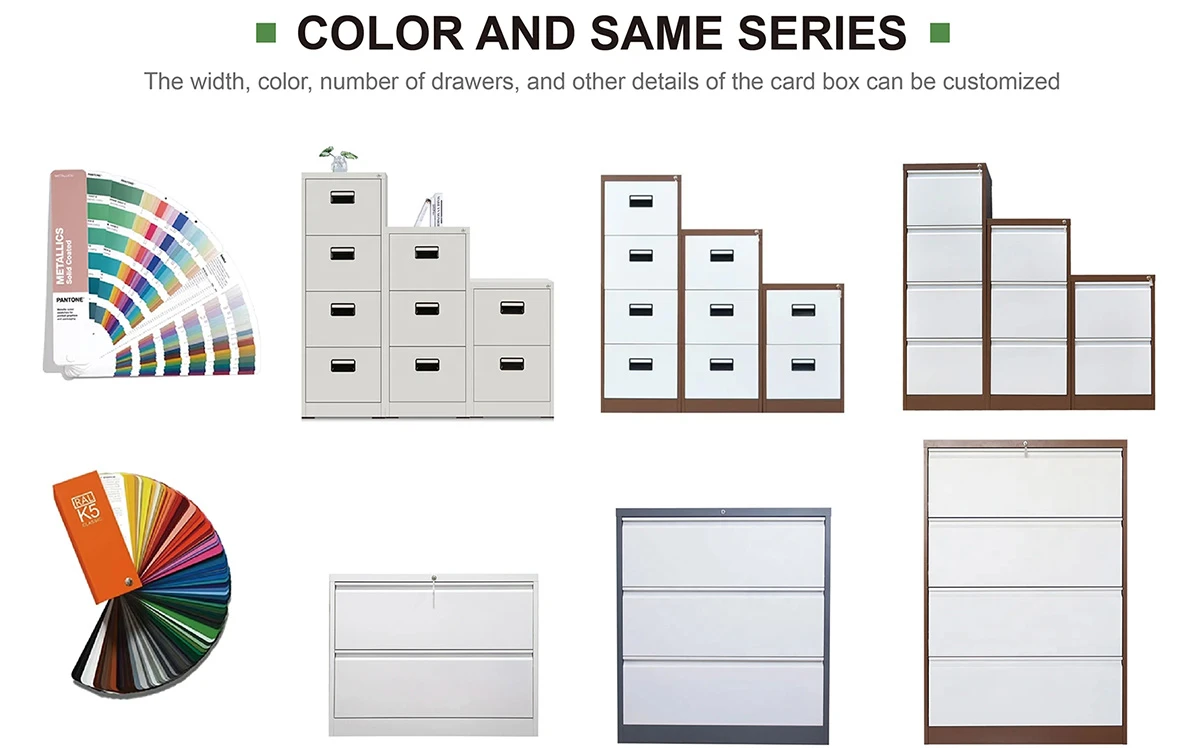
- Surface treatment: Confirm epoxy powder coating and RAL color codes.
- Structural features: Number of drawers (2, 3, 4, or 5); compatibility with A4/F4 hanging file systems; lock types; and handle styles. Determine if there is a requirement to open only one drawer at a time or multiple drawers simultaneously.
- Load-bearing capacity: Clearly specify the required static load capacity for each drawer.
- Packaging standards: Specify standard cartons or export-grade packaging to prevent damage from bumps or impacts during ocean shipping.
2. Obtain tiered pricing
Do not limit your inquiry to the unit price for your current order volume. It is best to request specific unit prices for quantities such as 100, 300, 500, and 1,000 units.
This allows you to see the price differences across various volume tiers, facilitating future restocking and price negotiations.
3. Negotiate comprehensive commercial terms
The unit price is just one aspect of the transaction; the full set of commercial terms must be discussed and confirmed:
- Payment terms: Negotiate the ratio of the deposit to the final balance.
- Confirm Incoterms (e.g., FOB or CIF) and clearly define which party is responsible for freight and insurance costs.
- Lead times: Obtain written confirmation of production and shipment schedules, and build in a buffer for potential delays caused by holidays.
4. Confirm the pre-production sample
Do not skip this step; the sample must be manufactured in strict accordance with your project specifications.
- Physically inspect the welding, powder-coated finish, drawer sliding action, and lock functionality.
- Use calipers to verify actual dimensions and steel plate thickness.
- Designate this pre-production sample as the "golden sample" (standard reference) for mass production to ensure quality consistency.
5. Review the factory's quality control processes
Inquire about the supplier's internal quality inspection standards:
- Raw material inspection and in-process quality checks.
- Pre-shipment inspection standards and the availability of formal quality inspection reports.
- Willingness to accommodate third-party inspections prior to container loading.
6. Clarify after-sales warranty terms
- Confirm the specific warranty periods for the cabinet structure, powder coating, and hardware accessories.
- Clearly define the issue-resolution process with the vendor-such as whether replacements will be sent or financial adjustments made-and document everything in writing before placing the order.
7. Plan logistics and customs clearance in advance; coordinate early with your freight forwarder.
- Consolidate different product categories into full container loads (FCL) whenever possible to reduce logistics costs.
- Confirm that the factory can provide a complete set of customs clearance documents: commercial invoice, packing list, bill of lading, and any other required certificates.
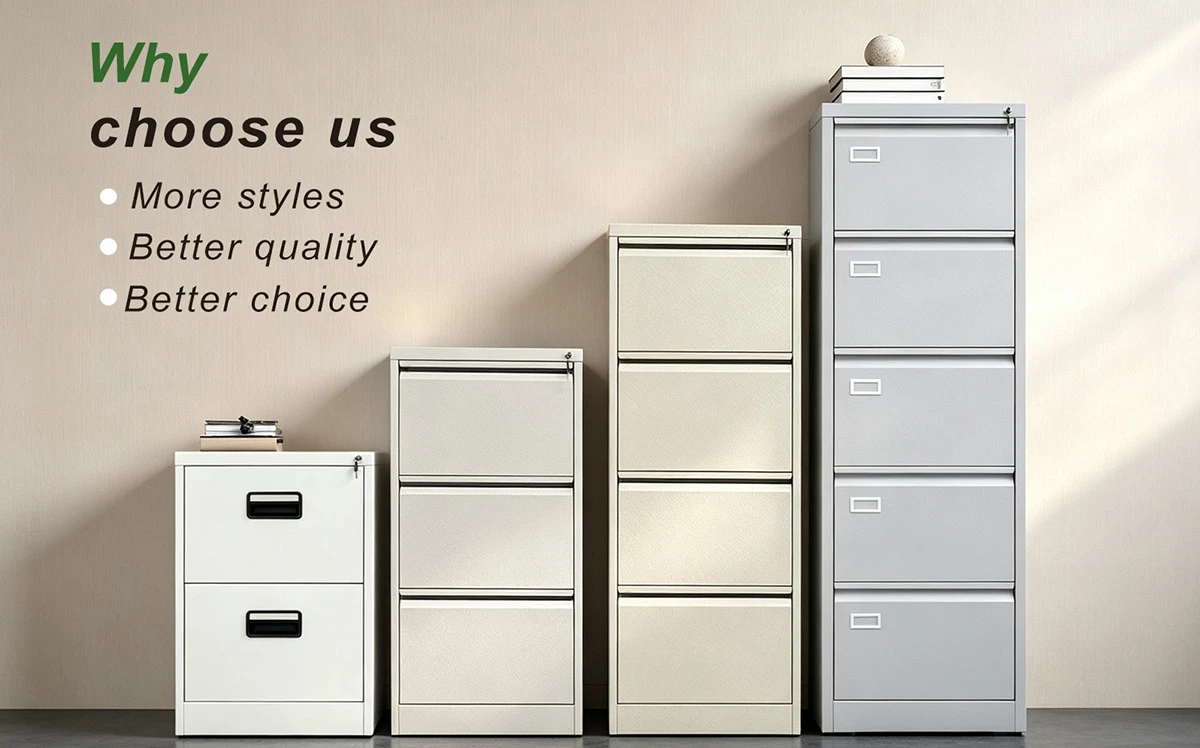
When sourcing cost-effective vertical card and file cabinets, the goal is a long-term partnership rather than a one-off transaction.
To find a reliable steel furniture manufacturer, you must assess their ability to precisely meet technical specifications, negotiate comprehensive business terms, and ensure rigorous quality checks at every stage.
Selecting a high-quality supplier at the source not only ensures stable profitability for your business but also guarantees the delivery of compliant products to end customers.


