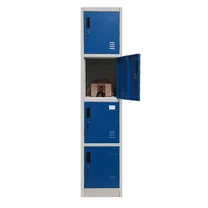
Double-door metal filing cabinets are widely used in various commercial and office environments due to their fireproof, anti-theft, durable, and large capacity. The following are 5 typical commercial scenarios, detailing their specific uses, advantages, and purchase recommendations.
Corporate office (file archiving and confidential storage)
Application requirements: In daily operations, companies need to store important documents such as contracts, financial statements, and personnel files, requiring filing cabinets to have fireproof, moisture-proof, and dustproof functions.
Specific uses:
Finance department: store invoices, account books, and tax information (locks are required).
Human Resources Department: Store employee files and salary records (which need to be managed in different categories).
Management office: Important contracts and commercially confidential documents (electronic password locks are recommended).
Schools and educational institutions (management of student records and teaching materials)
Application requirements: Schools need to keep student records, test papers, lesson plans, etc., for a long time, and require metal filing cabinets that are moth-proof, moisture-proof, and easy to organize.
Specific uses:
Dean's Office: Store student records and transcripts (need to be kept for a long time).
Teacher's Office: Lesson plans, test papers, teaching reference materials (need to be stored in categories).
Library: Precious documents, bound volumes of journals (moisture-proof file cabinets are recommended).
Medical institutions (storage of medical records and medical records)
Application requirements: Hospitals and clinics need to safely store patient records, examination reports, and prescription records, and must comply with privacy protection regulations (such as HIPAA).

Specific uses:
Medical record room: Archive medical records (requires double protection from fire and moisture).
Pharmacy: prescription records, drug in and out documents (lock required).
Administrative office: medical equipment purchase contracts, medical insurance information (password lock recommended).
Government agencies and archives (confidential documents are kept for a long time)
Application requirements: Government documents usually involve policies and regulations, citizen archives, meeting minutes, etc., requiring high security, fire prevention, and tamper-proof.
Specific uses:
Archives: red-headed documents, historical archives (need constant temperature and humidity environment adaptation).
Public Security Bureau/Court: case files, judicial documents (need anti-pry design).
Municipal office: urban planning drawings, land registration information (anti-magnetic cabinets are recommended for electronic backup storage).
Banks and financial institutions (custody of bills and customer information)
Application requirements: Banks need to store customer contracts, transaction vouchers, check stubs, etc., requiring anti-theft, fire prevention, and moisture resistance.
Specific uses:
Counter backstage: daily transaction documents, cash registration forms (need daily access design).
Credit department: loan contracts, mortgage documents (need to be kept for a long time).
Auxiliary storage in the vault: backup of important customer information (fireproof and explosion-proof type is recommended).